How To Change The Default Font In Outlook
A practical step-by-step guide to how to change the default font in outlook, including preparation, instructions, common issues, tips, and next steps.
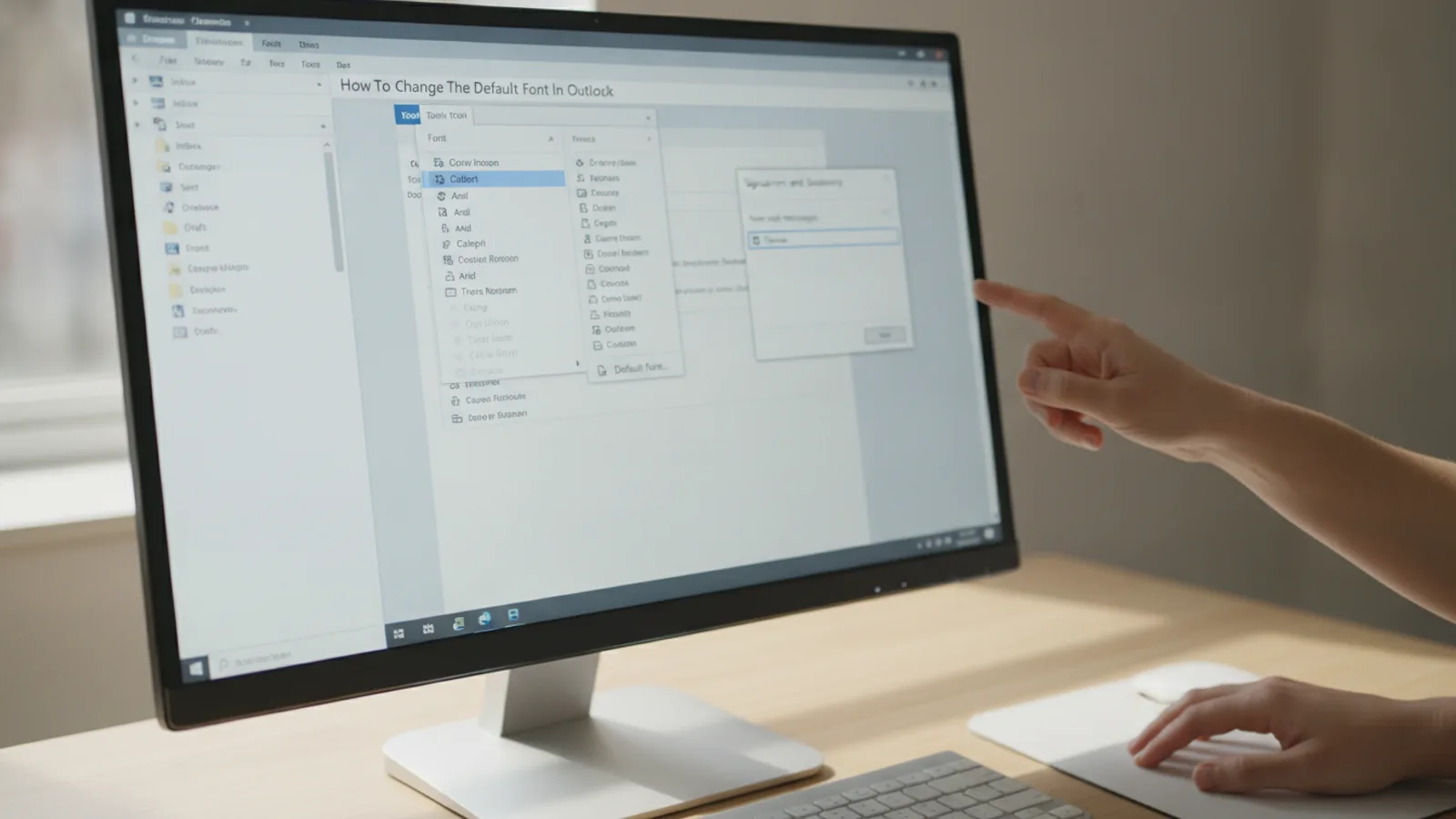
How To Change The Default Font In Outlook
This guide explains how to approach how to change the default font in outlook, including the preparation, practical steps, common mistakes, and final checks that help you finish with confidence.
Before You Start
Step-by-Step Instructions
Quick Reference
Common Problems When You Change The Default Font In Outlook
Even with clear instructions, you might encounter a few hiccups when trying to change your default font in Outlook. Here are some common issues and their straightforward solutions:
Problem: The Font Doesn't Change for New Emails or Replies
This is the most frequent issue. You've gone through all the steps, but when you compose a new email, the font is still the old one.
Solution:
Problem: Font Changes for New Emails but Not for Replies/Forwards
You've successfully changed the font for new messages, but when you hit "Reply" or "Forward," the text reverts to the old font or a different one.
Solution:
Problem: Outlook Reverts to the Old Font After a While
You set your font, it works for a day or two, then suddenly it's back to the original or a different font.
Solution:
Problem: Changes Don't Affect Old Emails
You've changed your default font, but when you open old emails in your inbox, they still look the same.
Solution:
Advanced Tips for How To Change The Default Font In Outlook
Once you're comfortable changing your default font, consider these advanced tips to further customize your Outlook experience and ensure professional consistency.
Utilize Outlook Themes for a Unified Look
Beyond just changing fonts, Outlook offers themes that can affect the entire appearance of your emails, including background colors, graphic elements, and fonts. While our guide focused on manual font changes, exploring themes can give your emails a more polished and branded feel.
- Access Themes: In the "Signatures and Stationery" dialog box (File > Options > Mail > Stationery and Fonts...), click the "Theme..." button.
- Choose a Theme: Browse through the available themes. Selecting a theme will often override your default font choices for new messages, so apply it carefully.
- Customize Theme Fonts: Some themes allow for font customization within the theme settings. If you choose a theme, ensure its fonts align with your brand or personal preference.
Ensure Signature Fonts Match Your Default
If you use email signatures, it's crucial that their font matches or complements your new default font. A mismatched signature can look unprofessional.
- Edit Signatures: In the "Signatures and Stationery" dialog box, click on the "Signatures..." button.
- Adjust Signature Font: Select your signature, and then use the formatting tools within the signature editor to update the font, size, and color to match your newly selected default font. Save your changes.
Consider Web-Safe Fonts for Universal Readability
While you can set any font installed on your computer as your default, remember that your recipients might not have that same font installed. If they don't, their email client will substitute it with a generic font, which might change the look of your message.
- Common Web-Safe Fonts: Stick to widely available fonts like Arial, Calibri, Times New Roman, Verdana, Georgia, or Tahoma. These fonts are commonly installed on most computers and operating systems.
- Impact on Recipients: Using web-safe fonts ensures a more consistent viewing experience for everyone who receives your emails, regardless of their email client or operating system.
Set Different Fonts for Different Email Accounts (If Applicable)
If you manage multiple email accounts in Outlook (e.g., a personal account and a work account), you might want different default fonts for each. Outlook's "Stationery and Fonts" settings are typically global for the entire profile.
- Manual Override: While Outlook doesn't offer a direct "per account" default font setting in the Stationery, you can manually override the font for a specific email account when composing a new message.
- Temporary Solution: After clicking "New Email," if you have multiple accounts, select the desired "From" account. Then, on the "Format Text" tab, change the font manually before typing. This isn't a "default" but a quick way to ensure a specific account uses a specific font for that message.
- Signature as Workaround: You could embed the desired font into each account's unique signature, making sure the signature text itself uses the desired font and then beginning your email immediately after the signature.
How To Change The Default Font In Outlook FAQ
Here are answers to some common questions about changing the default font in Outlook:
Q: Will changing my default font in Outlook affect how others see my emails?
A: Yes and no. The font you choose is what you will compose your emails in. When you send an HTML-formatted email, Outlook embeds your font choice. However, if the recipient's email client doesn't have that specific font installed, their system will typically substitute it with a similar or generic font (like Arial or Times New Roman). To ensure consistent appearance for recipients, it's best to use widely available "web-safe" fonts like Calibri, Arial, or Verdana.
Q: Can I have a different default font for each of my email accounts in Outlook?
A: The "Stationery and Fonts" settings in Outlook are generally profile-wide, meaning they apply globally to all accounts within that Outlook profile. Outlook doesn't natively offer separate default font settings for each individual email account through the standard Stationery options. If you need distinct fonts per account, you would typically need to manually change the font for each new message, or rely on a custom signature that enforces a specific font for each account.
Q: How do I change the font for just one specific email, not the default?
A: When you are composing an email, simply highlight the text you want to change. Then, use the font formatting options available in the "Format Text" tab on the Outlook ribbon (at the top of the message window). You can select a different font, size, color, and style for that specific text without affecting your overall default settings.
Q: What if I want to go back to Outlook's original default font?
A: Outlook doesn't have a "Reset to Default Font" button in the Stationery settings. The standard default font for Outlook is typically Calibri, 11pt, in black color. You can manually go back into the "Stationery and Fonts" settings (File > Options > Mail > Stationery and Fonts...) and select Calibri, Regular, Size 11, and Automatic (black) for all three message types (new mail, replies, plain text).
Q: Does this work for Outlook on the web (Outlook.com) or Outlook mobile apps?
A: No, this guide specifically covers the Microsoft Outlook desktop application. Outlook on the web (Outlook.com or Outlook for Microsoft 365 web version) and Outlook mobile apps have different interfaces and separate settings for default fonts. Typically, you would find those settings within the "Settings" or "Options" menu of the respective web or mobile application.
Final Checklist for How To Change The Default Font In Outlook
Before you wrap up, use this checklist to ensure you've successfully changed your default font and everything is working as expected:
- Confirmed New Mail Font: Did you compose a new email and verify that the font, size, and color are exactly what you set for "New mail messages"?
- Confirmed Reply/Forward Font: Did you reply to or forward an existing email and check that the font in your response matches your setting for "Replying or forwarding messages"?
- Confirmed Plain Text Font: Did you verify the font for "Composing and reading plain text messages" (even if you rarely use it, it's good to ensure it's set)?
- Clicked All "OK" Buttons: Did you click "OK" on the font selection box, the "Signatures and Stationery" dialog, and the main "Outlook Options" dialog to save all changes?
- Restarted Outlook (If Needed): If changes didn't immediately take effect, did you close Outlook completely and then reopen it?
- Considered Web-Safe Fonts: Have you chosen a common font that is likely to be installed on recipients' computers for better consistency?
- Updated Email Signatures: If you use signatures, have you ensured their font matches your new default, or at least complements it?
- Tested for Common Problems: If you ran into any issues, did you refer to the "Common Problems" section for troubleshooting tips?
By following these steps and checks, you should now have a perfectly customized default font in your Outlook, ready for all your future communications.