How To Save An Email Template In Outlook
A practical step-by-step guide to how to save an email template in outlook, including preparation, instructions, common issues, tips, and next steps.
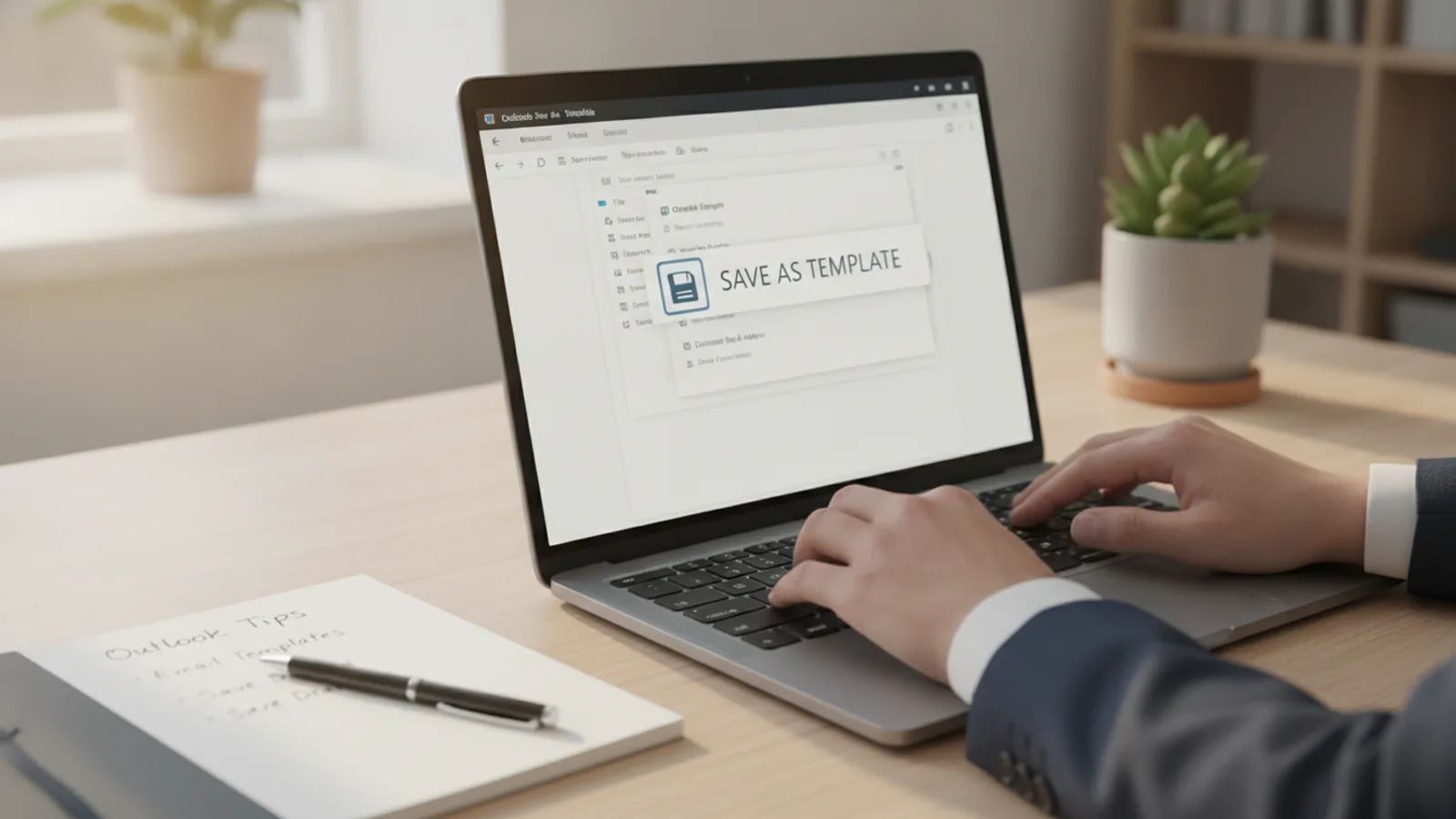
How To Save An Email Template In Outlook
This guide explains how to approach how to save an email template in outlook, including the preparation, practical steps, common mistakes, and final checks that help you finish with confidence.
Before You Start
Step-by-Step Instructions
Quick Reference
Common Problems When You Save An Email Template In Outlook
Even though saving an email template in Outlook is straightforward, you might encounter a few common issues. Knowing these problems and their solutions can help you troubleshoot quickly.
Problem: Can't Find My Saved Template
One of the most frequent issues is not being able to locate the template after you've saved it. This usually happens for one of two reasons: either it was saved in the wrong format or in the wrong location.
Problem: Template Opens as a New Email, Not a Template
Sometimes, when you try to open what you *think* is a template, it just opens as a regular email message that you can't edit or reuse easily. This is often related to how you're trying to open the file.
Problem: Template Content is Not What I Saved
You might open a template only to find that some parts of the content are missing, or it's an older version. This can happen if you made changes to the original email and forgot to re-save it as a template.
Problem: Template Has Old Attachments or Broken Links
If your template includes attachments or links, they might become outdated or broken over time. This is especially common if the attached files are moved or deleted from their original location.
Advanced Tips for How To Save An Email Template In Outlook
Once you're comfortable with the basic process of saving and using email templates, you can explore some advanced tips to make them even more powerful and efficient for your daily workflow.
Organize Your Templates with Subfolders
While Outlook saves all `.oft` files in one default folder, you can create subfolders within that default templates directory. For example, you might create folders like "Sales Templates," "HR Communications," or "Project X Updates."
Pin Your Favorite Templates to Quick Access Toolbar
If you use certain templates very frequently, you can add a shortcut to them directly on your Quick Access Toolbar in Outlook. This saves you from going through the "New Items > More Items > Choose Form..." menu every time.
Leverage "Quick Parts" for Reusable Text Snippets
Outlook's "Quick Parts" feature is different from full email templates but can complement them very well. Quick Parts are reusable blocks of text, images, or formatting that you can insert into any email, calendar item, or task. Think of them as mini-templates for specific paragraphs or phrases.
Share Templates with Colleagues
If you work in a team and everyone needs to use the same standardized messages, you can share your `.oft` templates with colleagues.
Using Placeholders for Dynamic Content
To make your templates truly dynamic, use clear placeholder text. Instead of just writing "Hello," write "Hello [Recipient Name]."
How To Save An Email Template In Outlook FAQ
Q: What is the difference between an Outlook Template (*.oft) and a standard email message (*.msg)?
A: An Outlook Template (*.oft) is designed to be a reusable blueprint. When you open an `.oft` file, it creates a brand new, unsent email message based on the template, leaving the original template file untouched. A standard email message (*.msg) is a saved copy of an actual email (either sent or a draft). If you open an `.msg` file, you're usually opening that specific saved email. While you can technically forward an `.msg` file, it doesn't offer the same clean, reusable starting point as an `.oft` template.
Q: Can I edit an existing Outlook email template?
A: Yes, you can. To edit a template, you first need to open it. Go to Home > New Items > More Items > Choose Form... > User Templates in File System and open the template you want to edit. Make your changes in the opened message window. Then, you must save it again as an Outlook Template: File > Save As, ensure the "Save as type" is Outlook Template (*.oft), and save it with the exact same file name in the same location to overwrite the old version. Confirm "Yes" when prompted to replace the existing file.
Q: Where does Outlook save email templates by default?
A: By default, Outlook saves templates in a hidden folder on your computer. The typical path is: C:\Users\[YourUsername]\AppData\Roaming\Microsoft\Templates. Replace [YourUsername] with your actual Windows username. The AppData folder is often hidden, so you might need to enable "Show hidden files, folders, and drives" in your File Explorer options to see it directly.
Q: Can I use templates in Outlook for Mac or Outlook on the web?
A: This guide specifically covers the desktop version of Outlook for Windows, where the `.oft` file format is used. Outlook for Mac has a similar feature called "My Templates" (sometimes called "Stationery") which works differently, often integrated into the "New Message" window or accessible via specific menu options. Outlook on the web also has a "My Templates" add-in that allows you to create and insert pre-written responses, but it's a separate feature and doesn't use `.oft` files.
Q: Is there a way to automatically insert a template when replying to certain emails?
A: Outlook's built-in rules feature doesn't directly support automatically inserting an `.oft` template into a reply. However, you can create a rule to "reply with a specific template" using a special action in Outlook rules. This requires creating the template as an Outlook Item (.msg) *first*, then specifying that message in the rule. This is a more advanced setup and differs from using `.oft` templates for new emails. For most users, manually selecting the template is the most reliable method.
Q: Can I include images or attachments in my templates?
A: Yes, you can. When you compose your original email before saving it as a template, you can insert images directly into the email body or attach files as you normally would. These will be saved as part of the `.oft` template. When you open the template, the images will appear, and the attachments will be included, ready to be sent. Be mindful that attached files can make template files larger, and if the attached files themselves are changed or moved on your computer, the template might still link to the old or broken version.
Final Checklist for How To Save An Email Template In Outlook
Before you wrap up, use this checklist to make sure you've successfully saved and can use your email template effectively:
By completing these steps, you've mastered how to save an email template in Outlook, paving the way for more efficient and consistent email communication.